Brandon University is pleased to announce that two BU researchers, Dr. Jennifer Mateer and Dr. Emma Varley, have received Insight Development Grants from the Social Sciences and Humanities Research Council of Canada (SSHRC). The grants, totalling more than $174,000, will support new research beginning June 1, 2026.
Dr. Jennifer Mateer, Assistant Professor in the Department of Geography and Environment, has received $91,000 over two years to develop and pilot a Relational Climate Literacy model for outdoor and land-based education. Working with K–6 teachers, pre-service teachers, and community partners, including the Riverbank Discovery Centre and the Brandon School Division, the project will examine the barriers that make it difficult for schools to take learning outdoors and identify practical ways to address them. Dr. Mateer is joined on this project by Co-Investigator Shawna Philpott, Director of Field Experience in the Faculty of Education.
The project will include the development of Manitoba Living Landscapes, a new interactive resource designed to help teachers plan locally grounded outdoor learning experiences. The research is guided by Etuaptmumk, or Two-Eyed Seeing, an approach that draws on the strengths of Indigenous and Western knowledge systems while respecting the relationships, responsibilities, and differences between them.
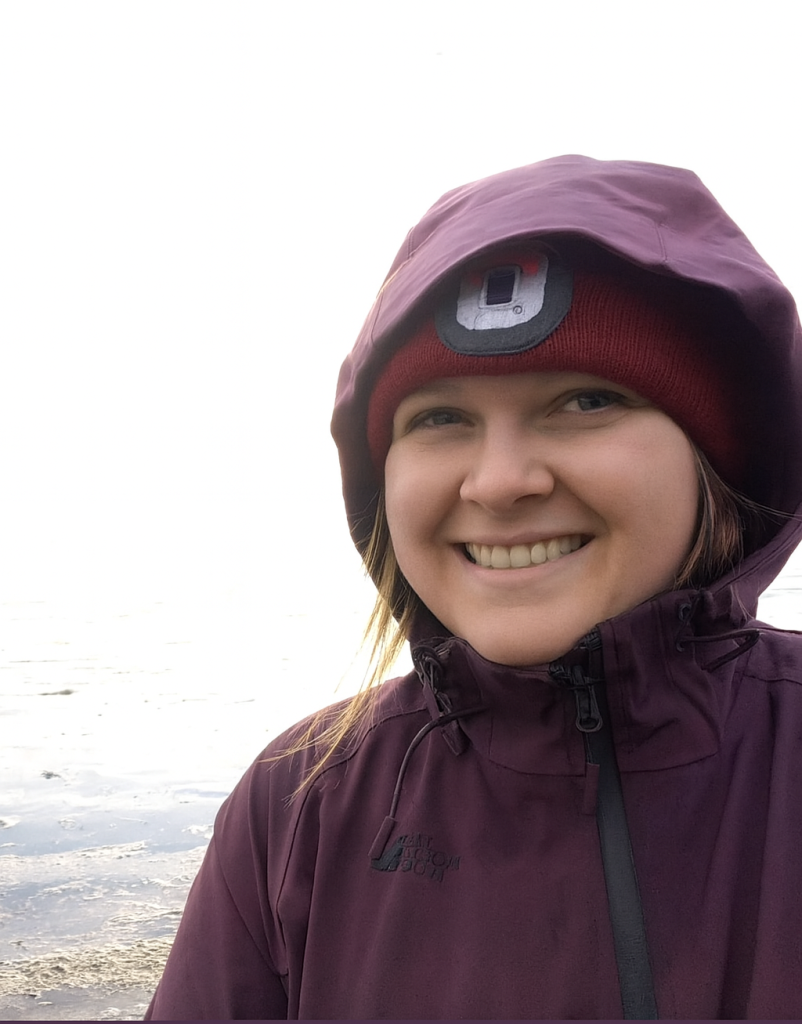
Assistant Professor
Geography and Environment
“This grant gives us the time to listen carefully to what teachers are telling us about the realities of outdoor learning.” said Dr. Jennifer Mateer, “We’re starting with the practical challenges educators face in Manitoba classrooms and school communities, then building resources alongside the teachers and community partners who will actually use them. Ultimately, the goal is to make meaningful, place-based learning outdoors more possible for students and educators.”
Dr. Emma Varley, Associate Professor in the Department of Anthropology, has received $83,458 over two years to undertake ethnographic research that explores how the legacies of the Second World War continue to shape the work of museum curators and conservators. Through interviews, workplace observation, and object-centred fieldwork at WWII museum sites in Canada, France, and the United Kingdom, the project introduces “haunted labour” as a new analytic for understanding how the lingering presences of difficult histories emerge through the everyday judgments and care practices of museum professionals.
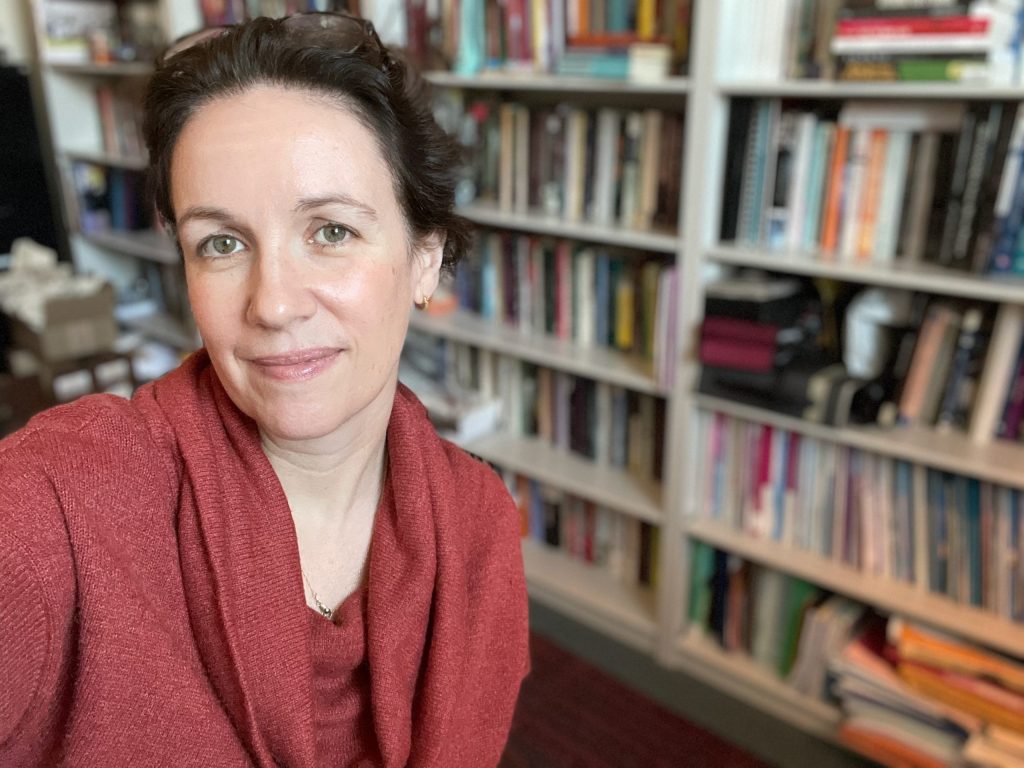
Associate Professor
Anthropology
“Museum staff often carry a kind of weight that rarely appears in job descriptions. This project offers a way of recognizing that work — not only the practical labour of caring for collections, but also the affective, ethical, and at times haunting responsibilities that accompany close, sustained engagement with the material traces of war.”
“Dr. Varley’s innovative work on the hidden dimensions of museum labour and leadership is receiving well-deserved national and international recognition. The commemoration and public memory of war remain essential and complex aspects of modern society. Museums influence how we interpret the past and given the great suffering and continuing human costs of global conflicts like the Second World War, it makes sense to consider how we can become haunted by these events and their complex legacies. Dr. Varley is bringing to the forefront issues that we often look past or are not even conscious of, even as they profoundly shape our understanding of the past and our hopes for the future.” – Dr. Gregory Kennedy, Dean of Arts
“I am thrilled to see collaborations across our institution and with community partners address important issues such as climate education. This project, led by Dr. Mateer in our Faculty of Science alongside co-applicant Ms. Shawna Philpott in Education, is an excellent example of the type of rigorous, community-informed research happening at Brandon University, and we’re glad to see it recognized and supported at the national level.” – Dr. Chris LeMoine, Dean of Science
“Brandon University is proud to support researchers whose work reaches beyond the campus, into schools, communities, and institutions around the world. Congratulations to Dr. Mateer and Dr. Varley on this well-deserved recognition from SSHRC.” – Dr. Christine Bovis-Cnossen, President and Vice-Chancellor
Insight Development Grants support the early stages of research, funding the development of new questions, methods, or approaches. Both projects will lay the groundwork for larger-scale SSHRC Insight Grant applications.
About Dr. Jennifer Mateer
Dr. Jennifer Mateer is an Assistant Professor in the Department of Geography and Environment at Brandon University. She is a geographer and community-engaged scholar whose research, teaching, and creative work focus on environmental justice, food systems, and participatory research methods, grounded in long-term relationships with local and regional partners. Her current projects include work with the Oneida Nation of the Thames on land-use planning, environmental protection, and Indigenous knowledges; nature-based play and land-based learning for children and youth; community mapping for pollinator health and green infrastructure with the City of Brandon; and research on active transportation in small cities. Her work regularly involves students as co-researchers, building their skills in participatory mapping, community facilitation, and ethical research practice.
About Dr. Emma Varley
Dr. Emma Varley is an Associate Professor in the Department of Anthropology at Brandon University. She is an external member of the Centre for Cultures of Reproduction, Technologies and Health at the University of Sussex, and a former President of the Canadian Anthropology Society (CASCA), having served in that role from 2022 to 2023. Her research interests span critical medical anthropology, global public health, violence and conflict, and hospital ethnography, with regional expertise in Pakistan, India, and Tanzania. She also has a long-standing research interest in ghosts, spectrality, and hauntings, which informs the conceptual framework of her current SSHRC-funded project.
Contact
- Research
- VPRGS@brandonu.ca
To receive any BU publication in an alternate format please contact Communications@BrandonU.ca
About BU
Success is built at Brandon University. Our growing, progressive campus welcomes a diverse and inclusive community that combines proud tradition with shared ambition. Through our excellence in teaching, research, and scholarship, we educate students to make a meaningful difference as engaged citizens and leaders. Join us at BrandonU.ca.